
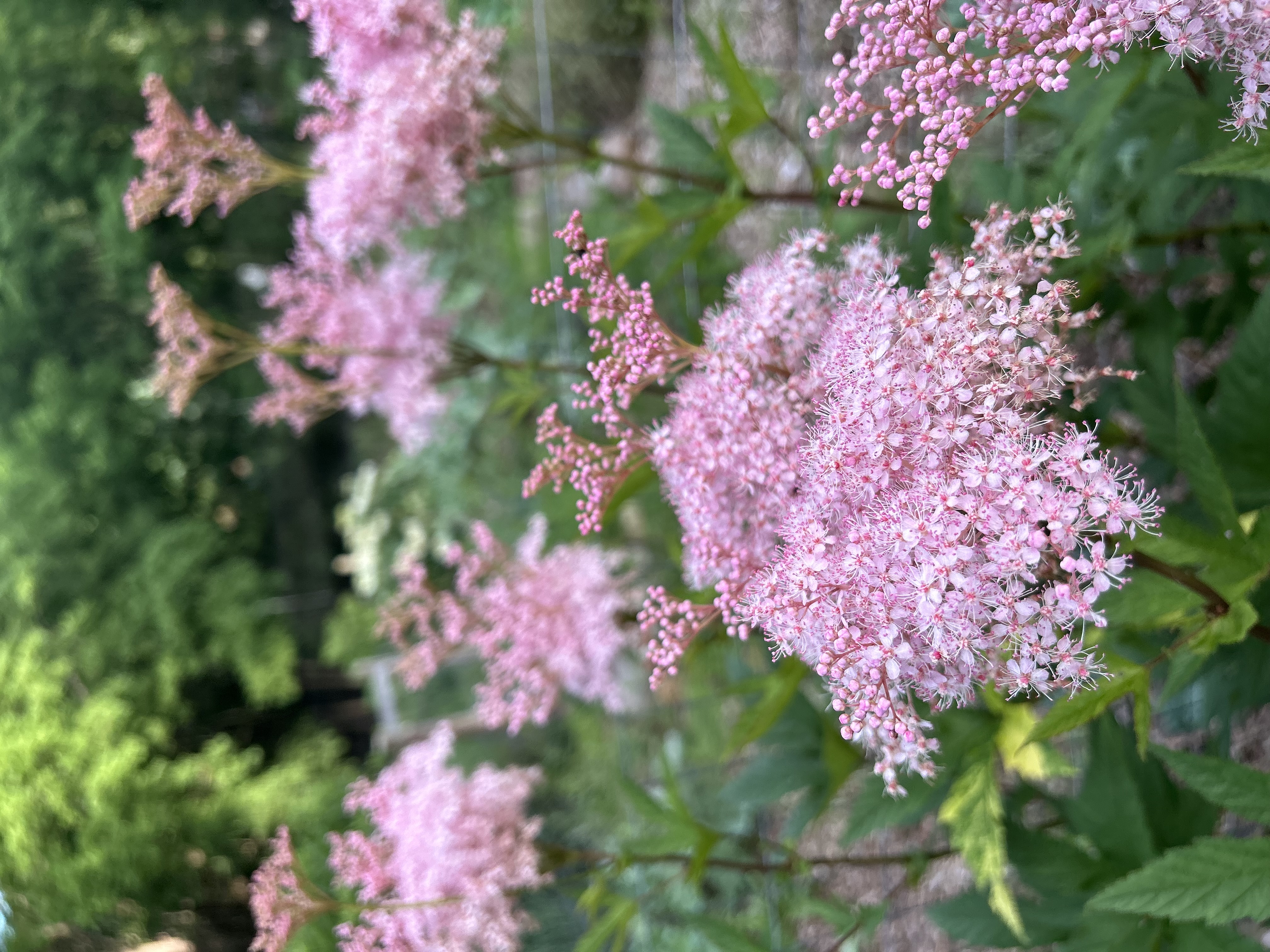
Filipendula rubra (Queen of the Prairie)
$8.00
Size: 3-7’ tall / 3-4’ wide
Sun: Full Sun - Part Sun
Soil: Wet-Medium, Rich
Bloom Time: Summer
Deer Resistance: 3.5/5
Ecotype: Unknown
When this flower blooms, it is easy to understand how the common name was coined; the cottony pink plumes certainly possess a regal appearance as they reign over grasses and other perennials. Each inflorescence is made of hundreds of small flowers that bloom from the bottom up, giving the appearance of a pink wave crashing under the upper buds. Aside from the showy flowers, both the foliage and the seedheads are also attractive. The compound leaves have several palmately-lobed leaflets that provide textural interest, and, when rubbed, have a mild sweet fragrance. After flowering, the plant produces reddish seedheads that transition to a dark brown through the season, persisting into the fall.
Plant Queen of the Prairie in a moist location that gets full sun, and it will thrive, sending out rhizomes to create a colony. However, it can also be grown in more average garden soils, so long as they do not remain dry for too long. It's spreading-nature may make it too aggressive for a small, tidy garden bed, so I recommend planting Queen of the Prairie in larger spaces where this characteristic can be appreciated.
Pollinators are attracted to the flowers, but, while the plant produces abundant pollen, it does not produce nectar. This is fine for certain native bees in search for pollen, but other nectar-loving pollinators will be disappointed. It is reported to be relatively deer-resistant, though I have not tested this myself.
