Allium cernuum (Nodding Onion)
$8.00
Size: 1-1.5’ tall / 6" wide
Sun: Full Sun - Part Sun
Soil: Dry-Medium, Well-Drained
Bloom Time: Mid- to Late Summer
Deer Resistance: 5/5
Ecotype: Virginia (Amherst Co.)
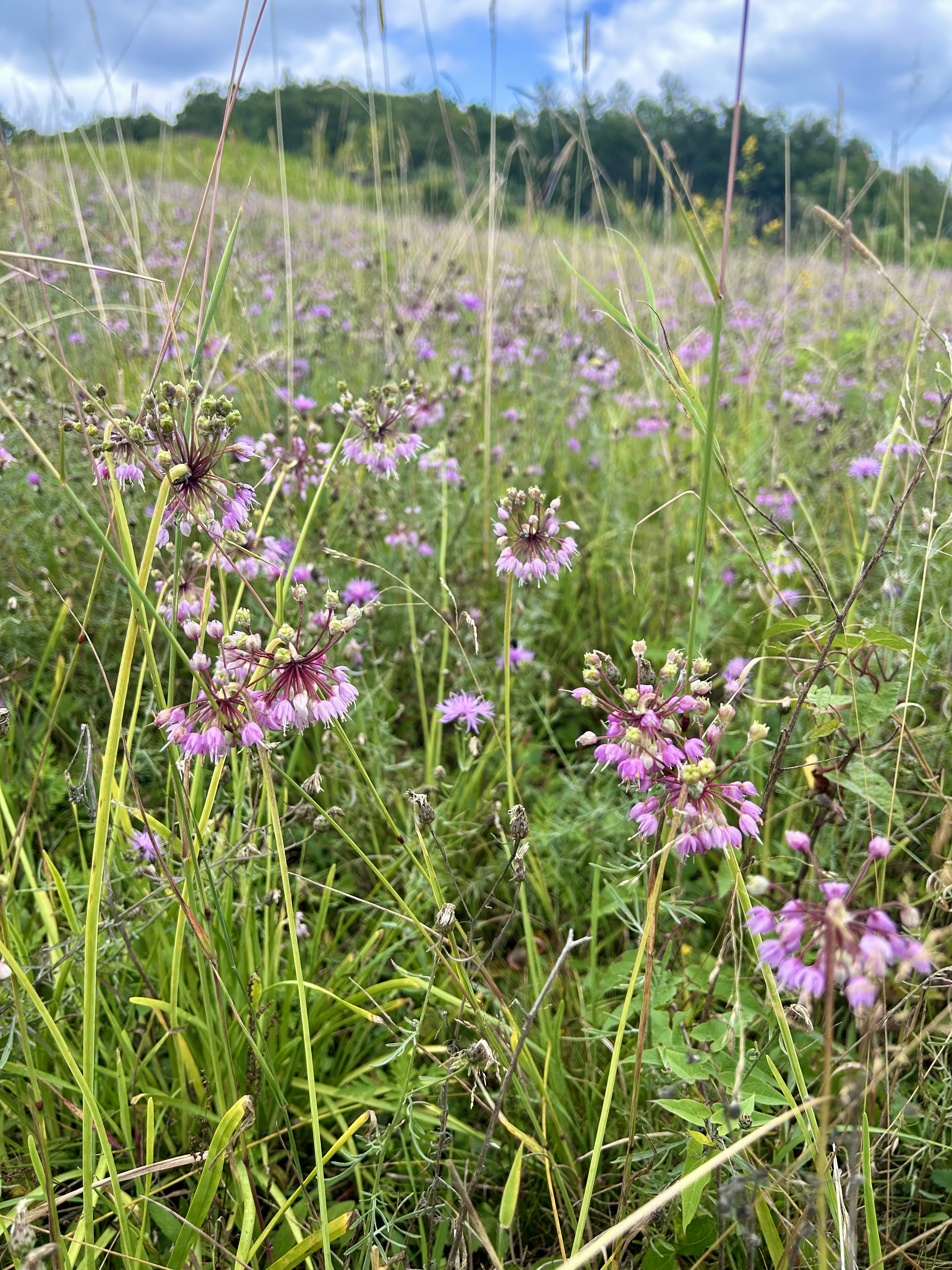
Like other Alliums, Nodding Onions don't have a huge presence for much of the year. With their thin, grass-like leaves, they blend in with surrounding foliage until they bloom in summer. Their flowers are sweet and delicate, ranging from lavender to white in color, and droop downwards-- hence the "nodding." Once pollinated, the flowers produce attractive seed heads punctuated by dark black seeds that persist through the fall.
I find Nodding Onions most attractive when planted en masse in meadow settings among other perennials, especially those that can provide interest when the Nodding Onions aren't in bloom. Due to their small footprint, they can easily weave between other plants, provided they don't smother them out entirely. In the wild, I have found them intermingling with Yarrow (Achillea gracilis), Wild Columbine (Aquilegia canadensis), Wild Bergamot (Monarda fistulosa), coneflowers (Rudbeckia spp.), and shorter grasses, among others (see last two photos). They will self-seed and fill in empty spaces, so keep that in mind.
The flowers attract bees, butterflies, and hummingbirds, and the hairstreak butterfly uses Nodding Onions as a larval host plant. Birds enjoy they seeds throughout the winter. Due to its oniony aroma, rabbits and deer leave this plant alone.
While Nodding Onions are edible to humans, they are not typically considered a choice edible.
